3D Printed Parts for Electric Vehicles: Why EVs Are Better Candidates for Additive Manufacturing
Complete guide to 3D printing parts for electric vehicles. Learn why EVs are ideal for 3D printed components, which parts work best, temperature considerations, and how the lack of ICE systems opens new opportunities.
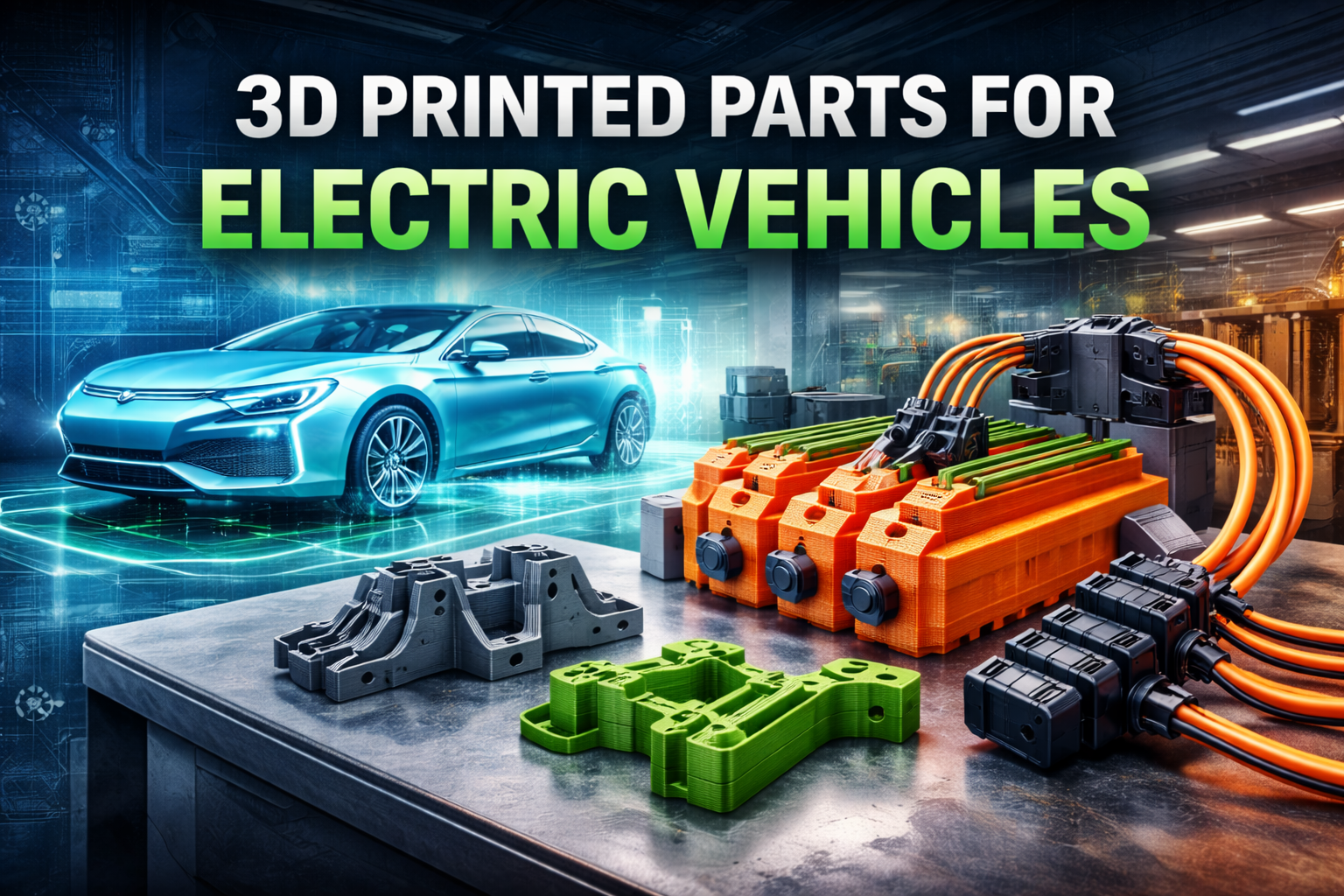
3D printing parts for electric vehicles - opportunities and applications
3D Printed Parts for Electric Vehicles: Why EVs Are Better Candidates for Additive Manufacturing
Electric vehicles present unique opportunities for 3D printing that internal combustion engine (ICE) vehicles don't. With significantly less heat generation, minimal vibration in many areas, and completely different component layouts, EVs are often better candidates for 3D printed parts than traditional vehicles.
This guide explores where 3D printing works particularly well for EVs, what makes them different from ICE vehicles, and which specific components benefit most from additive manufacturing.
For general 3D printing guidance, see: 3D Printing Car Parts: What's Possible, What's Safe, and What Actually Works
Why EVs Are Ideal for 3D Printed Components
Electric vehicles eliminate many of the harsh environmental conditions that make 3D printing challenging for ICE vehicles.
Key Advantages of EVs for 3D Printing
✅ Electric Vehicles: 3D Printing Friendly
Why EVs are better for 3D printing:
- Much lower temperatures - No combustion engine heat (typically 40-60°C vs 90-120°C+ for ICE)
- Minimal vibration - Electric motors run smoothly without ICE vibrations
- Simpler component access - Fewer tightly-packed components means easier custom solutions
- Modular design - EVs often have more space for custom brackets and mounts
- No exhaust system - Eliminates the hottest area of traditional vehicles
- Battery cooling focus - Parts near battery cooling are actually cool (30-40°C)
Result: Materials like PET-CF (205°C HDT) have a massive safety margin in EV applications.
⚠️ ICE Vehicles: More Challenging
Why ICE vehicles are harder for 3D printing:
- High heat zones - Engine block, exhaust, turbo reach extreme temps
- Constant vibration - Engine vibrations can cause part fatigue
- Limited space - Tightly packed engine bay limits custom solutions
- Combustion byproducts - Oil, fuel vapours, exhaust gases can degrade plastics
- Higher mechanical loads - More moving parts create more stress points
Result: Careful material selection and location assessment required.
The EV Advantage
Electric vehicles can reliably use 3D printed components in areas where ICE vehicles cannot. The absence of combustion heat and reduced vibration means parts that would fail in a petrol or diesel vehicle work perfectly in an EV.
This makes EVs ideal candidates for custom solutions, especially for older models where OEM parts become scarce.
Temperature Zones in Electric Vehicles
Understanding where heat does (and doesn't) occur in EVs is key to successful 3D printing.
| Area | Typical Temp | PET-CF Safe? | Notes |
|---|---|---|---|
| Cabin Interior | 20-30°C | ✅✅✅ Excellent | Ideal conditions for any material |
| Under-Bonnet (Motor Area) | 40-70°C | ✅✅ Excellent | Well within PET-CF limits (205°C) |
| Battery Compartment | 25-45°C | ✅✅✅ Excellent | Actively cooled, very stable |
| Inverter/Converter Area | 50-80°C | ✅✅ Excellent | Usually has active cooling |
| Charging Port Area | 30-50°C | ✅✅✅ Excellent | Minimal heat generation |
| Wheel Wells (Regen) | 40-60°C | ✅✅ Very Good | Some brake heat during regen |
| DC Fast Charging Cables | 40-60°C | ✅✅ Excellent | Gets warm but not extreme |
Key Insight: Almost the entire EV drivetrain operates at temperatures easily handled by PET-CF (205°C HDT) or even PETG (75°C HDT for less critical areas).
Best 3D Printed Parts for Electric Vehicles
Charging Cable Management
One of the most practical EV-specific applications for 3D printing.
Excellent applications:
- Cable hooks and holders - Mount in garage or on wall
- Charging port covers - Protect port when not in use (cosmetic)
- Cable organizers - Keep home charging cable tidy
- Wall-mount brackets - Custom fit for your specific charger
- Cable strain relief - Protect cable at common stress points
Material recommendation: PETG or PET-CF Temperature exposure: Minimal (30-50°C maximum during charging) Durability: Excellent - no mechanical stress, low heat
Popular EV 3D Print
Charging cable wall mounts are among the most printed EV accessories. Simple to design, print in a few hours, and solve a genuine organizational problem. Many EV owners design custom solutions for their specific home setup.
Battery Area Components (Non-Structural)
The battery area stays relatively cool due to active thermal management.
Suitable applications:
- Cable management clips - Route wiring around battery
- Sensor brackets - Mount temperature or monitoring sensors
- Access panel clips - Replace broken plastic clips
- Coolant reservoir mounts - Non-load-bearing supports
- Protective covers - Shield components from road debris
Material recommendation: PET-CF (best for longevity) Temperature exposure: 25-45°C typical Critical note: NEVER print structural battery mounts or load-bearing components
Motor Bay Accessories
Electric motor bays are much cooler and cleaner than ICE engine bays.
Suitable applications:
- Cable routing guides - Organize high-voltage cables
- Inverter covers - Cosmetic or dust protection (non-structural)
- Motor mount accessories - Cable ties, routing clips
- Fluid reservoir caps - Coolant expansion tank caps (non-pressurized)
- ECU brackets - Non-vibrating, cool environment
Material recommendation: PET-CF Temperature exposure: 40-70°C typical (well within PET-CF limits)
Interior and Cabin Parts
EV interiors are identical to ICE vehicles, but some EV-specific components exist.
EV-specific interior parts:
- Charging status display mounts - Aftermarket display brackets
- Battery percentage gauge holders
- Tablet/phone mounts - For monitoring apps
- Center console organizers - Often different layout than ICE version
- 12V battery access covers - Many EVs have accessible 12V battery
Material recommendation: PETG or PET-CF Temperature exposure: 20-40°C maximum (dashboard in sun can reach 60°C+)
Wheel and Brake Area Components
EVs use regenerative braking, meaning less brake heat than ICE vehicles.
Suitable applications:
- Wheel well clips - Replace broken plastic clips
- Mud flap mounts - Custom mounting solutions
- Sensor brackets - ABS or wheel speed sensors
- Wheel arch liners - Replace damaged sections (not entire liner)
Material recommendation: ASA or PET-CF (UV resistance important) Temperature exposure: 30-60°C typical (much less than ICE brake systems) UV exposure: Significant - use UV-resistant materials
Brake Components Warning
Never 3D print actual brake components - callipers, pistons, pads, discs, or brake fluid reservoirs are safety-critical.
Only print mounting brackets or protective covers that don't affect braking performance.
Frunk Storage Solutions (Front Trunk)
Many EVs have a frunk where the engine would be in an ICE vehicle.
Excellent applications:
- Custom storage dividers - Organize frunk space
- Tool holders - Mount tools or emergency kit
- Grocery bag hooks - Prevent items rolling around
- First aid kit mounts - Secure emergency supplies
- Umbrella holders - Custom fit for frunk
- Charging cable storage - Keep emergency charging cable organized
Material recommendation: PETG or PET-CF Temperature exposure: 20-40°C typical (very mild environment) Design freedom: Large, open space allows for creative solutions
EV-Specific Part Examples with Real-World Use Cases
Tesla Model 3/Y: Common 3D Prints
Most printed parts:
- Center console organizer - Standard console is too open
- Wireless charging pad spacers - Fix phone fitment issues
- Door pocket organizers - Add compartments
- Frunk storage bins - Divide large frunk space
- Coat hooks - Add passenger coat hooks
Why these work well:
- Interior location (mild temperatures)
- Low mechanical stress
- Highly customizable to personal preference
- OEM alternatives expensive or unavailable
Nissan Leaf: Practical Repairs
Common applications:
- Charging port door clips - Frequently break, easy to print
- 12V battery access cover - Simplified access solutions
- Dashboard trim clips - Replace brittle aged plastic
- Door handle trim - Cosmetic repairs
- Center console latch - Functional replacement
Material: PETG for most, PET-CF for longevity
Renault Zoe: Custom Solutions
Popular prints:
- Cable management for home charging
- Phone holder for dashboard
- Glove box organizers
- Coin holder replacements
- Sun visor clips
Comparing Material Requirements: EV vs ICE
| Application Area | EV Material | ICE Material | EV Advantage |
|---|---|---|---|
| Motor/Engine Bay Brackets | PETG or PET-CF | PET-CF minimum | Cheaper materials work |
| Battery/Engine Area Mounts | PET-CF | PET-CF or PAHT-CF | Lower temps = easier |
| Cooling System Parts | PETG or PET-CF | PET-CF required | Lower coolant temps |
| Under-Bonnet Covers | PETG adequate | PET-CF minimum | No combustion heat |
| Exhaust Area Parts | N/A (no exhaust) | Metal only | Entire area eliminated |
The practical result: EV owners can often use cheaper, easier-to-print materials (like PETG) where ICE vehicles require more expensive engineering plastics (PET-CF, PAHT-CF).
What NOT to 3D Print on EVs
Despite EVs being more 3D-printing-friendly, certain components remain unsuitable.
Never Print These EV Components
❌ High-voltage cable insulation or supports
- Risk of electrical arc or fire
- Safety-critical electrical isolation
- Use OEM parts only
❌ Battery structural components
- Load-bearing battery mounts
- Crash protection structures
- Thermal runaway barriers
- Always use certified components
❌ Brake system components
- Brake callipers, discs, pads
- Brake fluid reservoirs
- Master cylinder components
- Safety-critical, use OEM only
❌ Steering system parts
- Tie rods, steering column parts
- Power steering components
- Safety-critical, no exceptions
❌ Suspension components
- Control arms, bushings (load-bearing)
- Shock mounts, spring seats
- Safety-critical structural parts
❌ High-voltage fuses or contactors
- Electrical safety components
- Arc-rated components required
- Use certified replacements only
High-Voltage Safety
EVs contain lethal high-voltage systems (300-800V). Never 3D print any part that touches, supports, or insulates high-voltage components. Even non-conductive plastics can fail catastrophically if not properly rated.
If in doubt, use OEM parts or consult a qualified EV technician.
Design Considerations for EV Parts
Weight Optimization
EVs benefit more from weight savings than ICE vehicles due to battery weight and range concerns.
Design strategies:
- Use lattice infill (15-30%) instead of solid fill where appropriate
- Design parts with ribbing for strength-to-weight ratio
- Hollow sections where stress allows
- Consider topology optimization tools for complex brackets
Material choice matters:
- PET-CF: High strength-to-weight ratio
- PAHT-CF: Better for impact-critical applications
- PETG: Lightest option for low-stress parts
Electrical Isolation
Many EV parts sit near high-voltage systems.
Safety principles:
- Maintain clearances from high-voltage cables (minimum 10mm+)
- No conductive filaments near HV systems (carbon fibre is semi-conductive)
- Don't replace insulating components with 3D prints
- Verify your part doesn't create arc paths between HV components
When in doubt: Keep 3D printed parts away from orange high-voltage cables and consult wiring diagrams.
Battery Cooling Considerations
Many EVs have active battery cooling systems.
Don't block airflow:
- Check for cooling vents before installing custom parts
- Ensure battery thermal management isn't compromised
- Consider whether your part affects underbody airflow
- Test battery temperatures after installing custom parts
EV Repair Opportunities for Independent Garages
As EVs age, 3D printing becomes more valuable for independent garages and mobile mechanics.
Why This Matters
For more on how independent garages are adapting to EVs, see: Will Independent Garages Survive the EV Transition
Opportunities for garages with 3D printers:
-
Obsolete Part Production
- Early EVs (Nissan Leaf 2011-2016, first-gen Teslas) have parts going obsolete
- 3D printing fills the gap for non-critical components
- Faster turnaround than ordering rare parts
-
Custom EV Conversions
- ICE-to-EV conversions need custom mounts and adapters
- 3D printing enables one-off solutions
- Battery pack mounting and cable management
-
Rapid Prototyping
- Test fitment before ordering expensive OEM parts
- Custom solutions for unique repair scenarios
- Verify dimensions without trial-and-error with metal fabrication
-
Value-Added Services
- Offer custom storage solutions
- Charging cable management for customers
- Personalized interior organizers
Garage Business Opportunity
3D printing EV accessories (cable organizers, frunk storage, custom brackets) can be a profitable side service for garages. Print overnight, install during routine service, charge £20-50 for custom solutions that cost £2-5 in materials.
EV-Specific Materials Recommendations
For Most EV Applications: PET-CF
Why PET-CF is ideal for EVs:
- 205°C HDT (massive safety margin in EV temps)
- Excellent stiffness (5320 MPa)
- Low moisture absorption (0.37%)
- No drying needed
- Superior to PAHT-CF for most EV use cases
UK Price: ~£79/kg (Bambu Lab UK)
Best for:
- Motor bay components
- Battery area brackets (non-structural)
- Long-term durability applications
- Under-vehicle components (mud flaps, clips)
For Interior Parts: PETG
Why PETG works for EV interiors:
- Adequate for cabin temperatures (20-40°C)
- Easier to print than PET-CF
- Good surface finish
- Lower cost (~£20-30/kg)
Best for:
- Frunk organizers
- Center console parts
- Dashboard accessories
- Storage solutions
For Exterior/UV Exposure: ASA
Why ASA works for EV exteriors:
- Excellent UV resistance
- Weather-resistant
- Good temperature range (90-100°C HDT)
Best for:
- Wheel well components
- External charging cable holders
- Mud flap mounts
- Underbody splash guards
Real-World Success Stories
Case Study 1: Nissan Leaf Charging Port Door
Problem: Charging port door hinge broke (common issue), OEM part £85 + fitting
Solution: Designed and printed replacement hinge in PET-CF
- Material cost: £2
- Print time: 3 hours
- Installation: 10 minutes
- Result: 18 months of use with no issues
Why it worked:
- Low mechanical stress (opens/closes gently)
- Cool location (external body panel)
- PET-CF's strength perfect for application
Case Study 2: Tesla Model 3 Frunk Organizer
Problem: Large frunk space needs organization, OEM solutions expensive or unavailable
Solution: Custom-designed modular organizer system in PETG
- Material cost: £8 (320g)
- Print time: 12 hours
- Design time: 2 hours (with multiple iterations)
- Result: Perfect fit, exactly meets owner's needs
Why it worked:
- Interior application (mild temps)
- No mechanical stress
- Fully customizable to owner's preferences
Case Study 3: Renault Zoe Cable Management
Problem: Home charging cable constantly on garage floor, tripping hazard
Solution: Wall-mounted cable holder with integrated hook system in PET-CF
- Material cost: £3
- Print time: 4 hours
- Installation: Wall-mounted with screws
- Result: Clean, organized garage charging setup
Why it worked:
- Zero temperature stress (garage ambient)
- Perfect custom fit for specific garage layout
- Solves problem OEM never addressed
Future of 3D Printing for EVs
As EV adoption increases and vehicles age, 3D printing will become more relevant.
Trends to watch:
- Obsolescence of early EV parts - 2011-2016 EVs already experiencing parts shortages
- Custom EV conversions - Classic car EV conversions need custom 3D printed components
- Aftermarket accessories - Growing market for EV-specific 3D printed accessories
- Battery refurbishment - Brackets and supports for refurbished battery packs
- Independent garage adoption - More garages adding 3D printing for EV servicing
For more on the future of EV maintenance, see: What Maintenance and Repairs Do Electric Cars Need
Getting Started with EV 3D Printing
Recommended Equipment
For EV parts printing, you need:
- 3D Printer: Minimum 220mm build volume, hardened nozzle
- Materials: PET-CF primary, PETG secondary, ASA for exteriors
- Tools: Calipers, deburring tools, basic hand tools
For detailed printer recommendations: Best 3D Printers for Automotive Car Parts
Skills Required
- Basic CAD design (Fusion 360, Tinkercad, OnShape)
- Slicing software (Bambu Studio, PrusaSlicer, Cura)
- Understanding of part orientation for strength
- Knowledge of EV systems (where it's safe to work)
Learning Resources
- Thingiverse/Printables - Existing EV part designs
- EV-specific forums - Speak Tesla, Leaf Talk, Zoe forums
- YouTube channels - EV repair and modification content
- Local maker spaces - Hands-on help and equipment access
Conclusion
Electric vehicles are exceptionally well-suited to 3D printed components. The combination of low temperatures, minimal vibration, and clean operating environments means parts that wouldn't survive in ICE vehicles work perfectly in EVs.
Key takeaways:
✅ EVs run cooler - Typical temps (40-70°C) well within PET-CF limits (205°C) ✅ More 3D printing opportunities - Charging accessories, frunk storage, motor bay components ✅ Cheaper materials work - PETG adequate where ICE vehicles need PET-CF ✅ Better long-term durability - Less vibration = less part fatigue ✅ Growing opportunity - Aging EVs need repair solutions as OEM parts become scarce
Safety reminder: Never print high-voltage electrical components, battery structural parts, or safety-critical systems. When in doubt, use OEM parts.
As EVs become more common and begin aging, 3D printing will play an increasing role in keeping them running affordably - especially for independent garages and DIY owners.
Related Articles
3D Printing for Automotive:
- 3D Printing Car Parts: What's Possible, What's Safe, and What Actually Works - Complete overview guide
- Best 3D Printers for Automotive Car Parts: UK Guide - Printer buying guide
- How to Anneal 3D Printed Car Parts - Optional post-processing
Electric Vehicle Information:
- What Maintenance & Repairs Do Electric Cars Need - Complete EV maintenance guide
- Will Independent Garages Survive the EV Transition - Industry outlook
- EV Training for Independent Garages - Upskilling resources
- What Will Independent Garages Look Like in 2040 - Future predictions
Vehicle Documentation:
- Digital Service History Guide - Track modifications and custom parts
About the Author: The AutoChain Team includes electric vehicle technicians, 3D printing specialists, and automotive engineers with experience in both EV maintenance and additive manufacturing. We focus on practical, safe solutions that help UK EV owners and independent garages adapt to the changing automotive landscape.