EV Maintenance & Repairs: What Electric Cars Need
EVs remove traditional service items but still need regular maintenance. Discover what tyres, brakes, fluids, electronics and diagnostics work independent garages can expect.
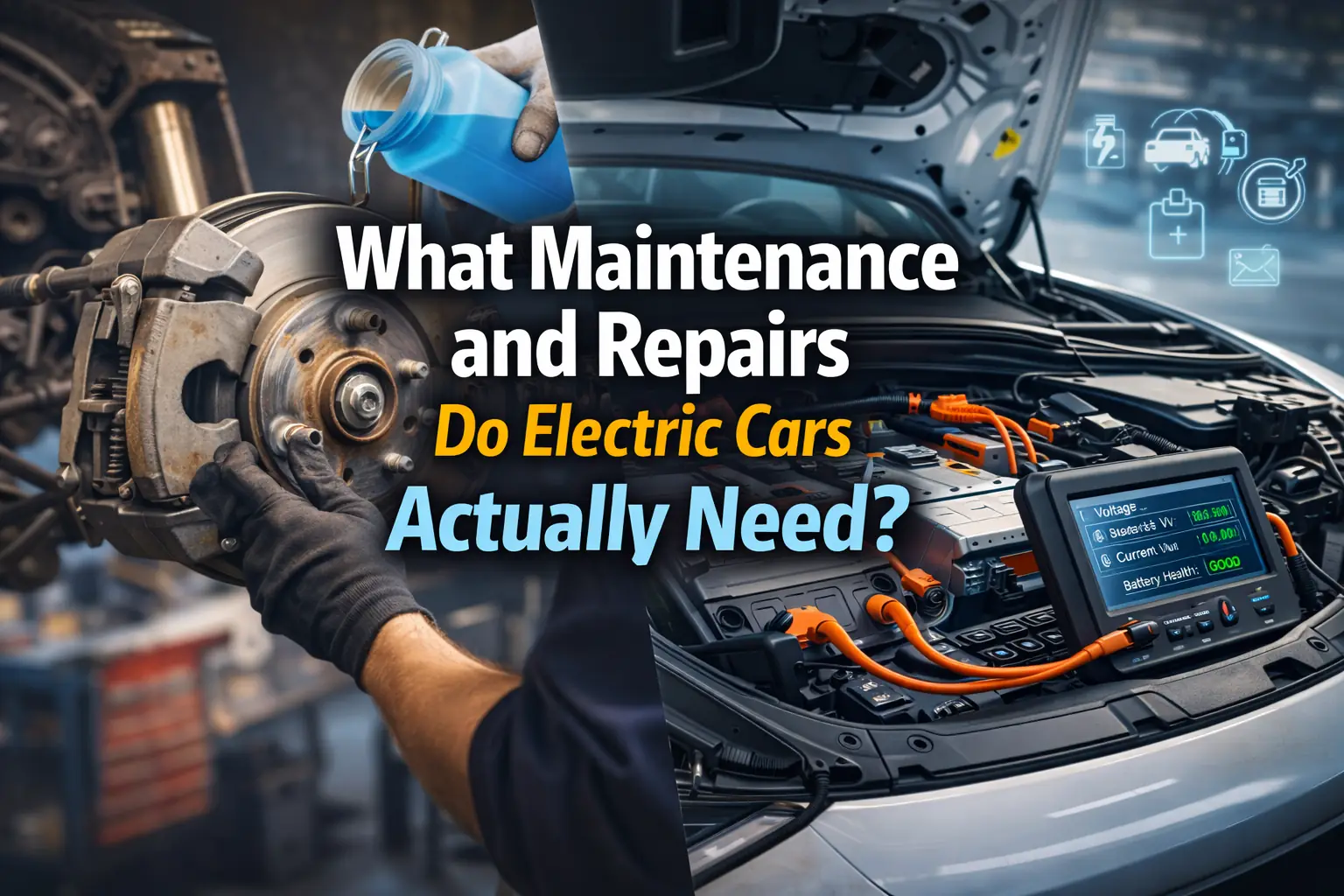
What maintenance and repairs do electric cars need - EV servicing guide
EV Maintenance & Repairs: What Do Electric Cars Need?
Electric cars remove many of the traditional service items independent garages have relied on for decades, but they do not remove the need for regular maintenance. Instead, the nature of workshop work shifts away from engines and exhausts towards tyres, brakes, suspension, fluids, electronics and diagnostics.
Key Takeaway
EVs change what breaks, not the fact that things still break. Many familiar repair jobs remain essential income streams for independent garages.
Tyres: The Most Consistent EV Service Item
Tyres are one of the most consistent and predictable wear items on EVs. Battery packs add significant weight, and instant torque places extra load on tyres during acceleration. As a result, EVs often require more frequent tyre inspections, alignment checks and replacements than comparable petrol or diesel cars.
For many garages, tyre work will remain a dependable source of recurring income.
| Factor | Impact on Tyres | Service Opportunity |
|---|---|---|
| Vehicle Weight | EVs are 200-300kg heavier than ICE equivalents | More frequent tyre replacement cycles |
| Instant Torque | Immediate power delivery increases wear during acceleration | Alignment and rotation services |
| Battery Positioning | Low center of gravity affects handling and wear patterns | Specialist EV tyre fitting and balancing |
Brakes: Regenerative Doesn't Mean Maintenance-Free
Brakes also continue to play an important role. While regenerative braking reduces friction brake usage, it does not eliminate it. Pads and discs still wear, brake fluid still degrades over time, and corrosion can actually become more of an issue on vehicles that rely heavily on regen.
Regular brake servicing and safety inspections remain essential.
Corrosion Risk
EVs using regenerative braking may have brake discs that corrode faster due to reduced friction cleaning. Regular inspections are critical for safety.
Fluids: Different, But Still Necessary
Although EVs do not need engine oil changes, they still rely on multiple fluids. Brake fluid, battery and motor cooling systems, steering fluid and washer fluid all require periodic inspection and replacement.
Thermal management systems are particularly important, as battery and motor longevity depends heavily on effective cooling.
| Fluid Type | Purpose | Service Interval |
|---|---|---|
| Brake Fluid | Hydraulic braking system | Every 2-3 years or manufacturer spec |
| Battery Coolant | Maintains optimal battery temperature | Vehicle-specific, often 4-5 years |
| Motor Coolant | Prevents motor overheating | Vehicle-specific, check annually |
| Gearbox Oil | Single-speed transmission lubrication | Often lifetime, but check manufacturer |
| Washer Fluid | Windscreen cleaning | Top up as needed |
Air-Conditioning: Exactly The Same
Air-conditioning systems remain unchanged in principle. Refrigerant leaks, compressor faults and cabin filter replacements follow the same time- and mileage-based schedules as internal combustion vehicles.
This is good news for garages — existing A/C expertise transfers directly to EVs with no additional training required.
High-Voltage and Electrical Work: The New Frontier
Electrical and high-voltage work becomes increasingly central. Battery health checks, charging system faults, inverter issues, wiring problems and software-related diagnostics will define much of the future repair landscape.
These are higher-skill jobs, but also higher-value ones.
Traditional vs. EV Workshop Skills
🔧 Traditional ICE Skills: Engine diagnostics, timing belts, spark plugs, exhausts, fuel systems, oil changes
⚡ EV Workshop Skills: High-voltage safety, battery diagnostics, inverter testing, charging faults, software updates, thermal management
Garages with EV training and certification can perform:
- Battery health diagnostics and range testing
- Charging system fault diagnosis
- Inverter and power electronics testing
- High-voltage isolation and safe working
- Software updates and calibration
- Thermal management system repairs
Familiar Bread-and-Butter Work Continues
Alongside this, familiar items such as 12V batteries, lighting, wipers, wheel bearings, suspension components, steering parts and MOT-related safety repairs remain everyday bread-and-butter work for independent garages.
EVs change what breaks, not the fact that things still break.
Good News for Independents
70% of EV servicing involves existing garage skills. Suspension, brakes, tyres, air-con, lights and MOT work are identical to ICE vehicles.
What This Means for Independent Garages
The shift to EVs does not eliminate maintenance work — it rebalances it. Garages lose oil changes and exhaust work but gain battery diagnostics, thermal system servicing and electrical troubleshooting. Garage management software can help you run a mixed ICE and EV workshop by keeping jobs, digital service records and scheduling in one place.
The real opportunity lies in positioning early. Garages that begin building EV capability now — even at a basic level — will be far better positioned than those waiting until ICE work disappears.
Related reading: Will Independent Garages Survive the EV Transition?
Why Choose AutoChain for Your EV or ICE Vehicle
Whether you drive an electric vehicle or a traditional petrol or diesel car, AutoChain connects you with trusted independent garages that can service and repair your vehicle to the highest standards.
Our network includes:
- ⚡ EV-trained technicians with high-voltage certification
- 🔧 Experienced mechanics for all ICE vehicle repairs
- 📱 Digital service history for all vehicle types
- 💷 Transparent, competitive pricing
Find a garage near you or learn more about our services.
Related Articles:
- Will Independent Garages Survive the EV Transition?
- EV Training for Independent Garages
- Will EV Repairs Be Controlled by Dealers?
- What Will Independent Garages Look Like in 2040?
Frequently Asked Questions
Do electric cars need less maintenance than petrol or diesel cars? Yes — in general, electric cars have fewer moving parts and therefore fewer components that wear out. There is no oil to change, no timing belt, no spark plugs, no exhaust system, and no traditional gearbox to service. However, EVs still require tyre rotation and replacement (often more frequently than ICE cars due to the additional weight of the battery), brake fluid changes (though regenerative braking reduces brake wear significantly), coolant system maintenance for the battery thermal management system, and regular software updates. Overall maintenance costs are typically 30–40% lower than an equivalent ICE vehicle over a five-year period, though individual costs like tyre and brake fluid replacements remain comparable.
Can independent garages legally work on electric vehicles? Yes. There is no legal requirement for EV work to be carried out by a main dealer, provided the technician holds the appropriate high-voltage qualifications. The Institute of the Motor Industry (IMI) EV qualifications (Levels 2, 3, and 4) cover the safety procedures required to work on high-voltage systems safely. Garages employing IMI-qualified EV technicians can legally carry out routine maintenance, diagnostics, and many repairs on electric vehicles. For warranty-covered repairs on newer vehicles, you must use a dealer to preserve the manufacturer warranty, but post-warranty EV work can legally be carried out by any suitably qualified independent garage.
What should I check on my EV before a long journey? Before any long journey in an electric vehicle, check the battery state of charge and plan your charging stops using the vehicle's built-in navigation or a dedicated app such as Zap-Map. Check tyre pressures — under-inflated tyres reduce range noticeably in EVs. Confirm the windscreen washer fluid is topped up and that all lights are working. Check that the charging cable is in the vehicle if you will need to charge en route. Review the weather forecast — cold temperatures reduce battery range by up to 20–30%, so factor this into journey planning.
Keep Reading
Related AutoChain articles for the same part of the ownership and workshop journey.
Dartford Crossing Closure: Updates & Routes 2026
Latest Dartford Crossing closure dates for May 2026. No ads, no spam - just essential information for UK drivers. Check closures, alternative routes, and travel tips.
Choosing the Best Garage Management Software for the UK Motor Trade: AutoChain vs. the Rest
A practical guide for independent UK garages comparing garage management software for the motor trade, including key features, pricing trade-offs, and why AutoChain stands out on value and innovation.
What Will Independent Garages Look Like in 2040?
By 2040, UK garages will be transformed. Discover what successful independent workshops will look like in an EV-dominated future.